
Deed Fraud Is One of America's Fastest-Growing Crimes, and the 2026 Numbers Show It
By John Pignetti
A family in Philadelphia found out the hard way. After her brother died in 2022, Elaine Garcia expected to inherit his home on North Randolph Street. Then she learned that a new deed had been recorded months before her brother's death, adding his caretaker and the caretaker's partner to the property. The deed showed the property had been transferred for just $1.
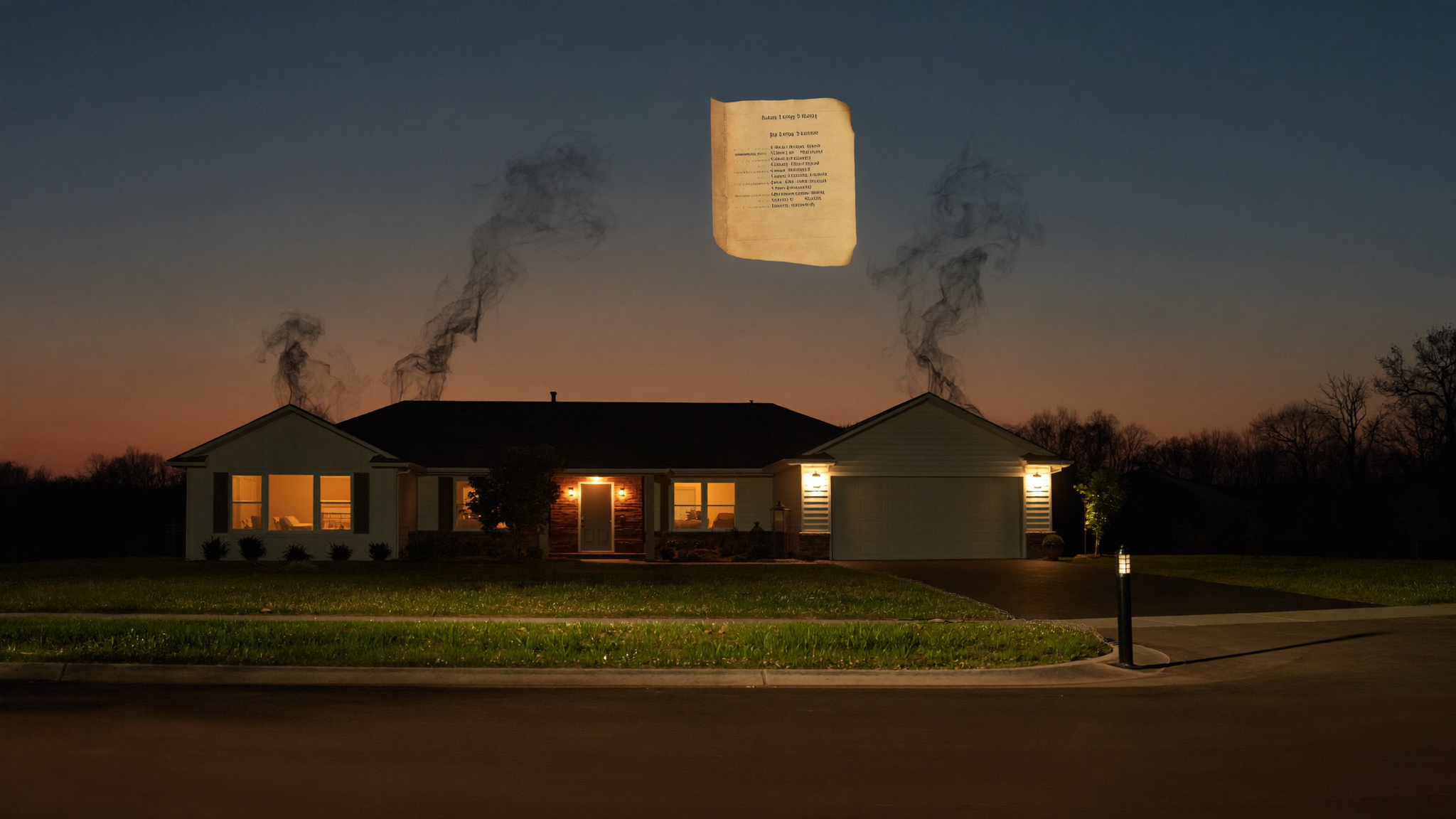
That's deed fraud. Nobody broke in or picked a lock. Somebody put a forged document into the public record, and on paper the house belonged to someone else.
It's also spreading. The FBI has described property fraud as one of the fastest-growing white-collar crimes, according to the Orange County, Florida Comptroller's office. The 2026 data shows the problem getting bigger, getting more sophisticated and reaching more kinds of property than it used to.
The numbers are moving fast, and in one direction
Start with the FBI. Cyber criminals stole more than $275 million through real estate-related fraud from at least 12,368 victims last year, according to a new report from the FBI's Internet Crime Complaint Center (IC3). In 2024, the same category showed 9,359 complaints and $173,586,820 in losses.
That works out to losses rising 58% and complaints 32% in a single year.
Those figures sit inside a much larger wave of fraud. The FBI's 2025 report logged 201,266 complaints, up 37% from 2024, and $7.748 billion in losses, up 59% from 2024.
Next is the title industry, which sees these schemes from the inside. The American Land Title Association's latest study found that 59% of firms reported experiencing at least one seller impersonation fraud attempt in 2025, more than double the 28% reported in ALTA's 2024 study. Over a shorter window it looks even worse: in April 2026 alone, 45% of firms reported at least one SIF attempt, compared with 19% during the same period two years earlier.
Elizabeth Blosser of ALTA said the findings confirm that seller impersonation fraud is "becoming more common, more sophisticated and more difficult to detect."
Real estate professionals report the same thing. In the National Association of Realtors' 2025 Deed and Title Fraud Survey, 63% of survey respondents said they were aware of such fraud occurring in their housing markets over the past year. The Northeast, where we're based, stands out: 92% of experts in that region were aware of such illegal activity occurring in their markets during the past 12 months.

Local headlines tell the same story
National statistics can feel abstract. The local reports are harder to ignore.
Philadelphia. Philadelphia has received 152 reports of deed fraud so far in 2026, nearly matching the 159 reports filed during all of 2025, according to the city's Department of Records. That puts the city on pace to exceed last year's deed fraud total by roughly 15%. District Attorney Larry Krasner told WCAU-TV that "deed fraud is going on in a really big way," and added that only a small share of cases are being caught.
New Jersey. A September 2026 report from the State Commission of Investigation concluded that New Jersey property owners have been, and in increasing numbers are being, victimized by deed fraud. The report cited FBI data showing 135 reported deed fraud incidents between 2020 and March 2026, and the FBI noted that the true number of cases is likely higher; many incidents go unreported or are classified as another type of fraud.
Detroit. Two Metro Detroit women were convicted of stealing approximately 100 Detroit properties worth $6.4 million by using fraudulent deeds, with Thomas exploiting her role at a housing nonprofit and Jackson as a county treasurer's office employee.
Jacksonville. Two women were arrested on fraud-related charges for allegedly filing bogus quit-claim deeds in the Springfield area. One of the people affected was a salon owner who had been in his building about 15 years and found himself facing eviction.
Houston. Officials in Harris County are warning homeowners about schemes that could strip families of their property and generational wealth, as lawsuits target nine people accused of fraudulently claiming homes.
Virginia. Lawmakers passed new protections. After a yearlong statewide study on the scope of deed fraud across the Commonwealth, the 2026 General Assembly passed companion bills HB 163 and SB 316, with some provisions in effect this year and others starting in July 2027.
To be fair about the data: more reports don't automatically mean more crimes. Philadelphia Records Commissioner James Leonard noted that the rise in reported cases does not necessarily mean the crime is happening more. Part of the increase may come from better awareness. Still, when the FBI, the title industry, Realtors, prosecutors and state investigators all report the same trend, homeowners should pay attention.
Why criminals are moving into real estate
The scheme itself is simple. A fraudster forges a property owner's signature on a deed, records it with the county clerk, and suddenly "owns" your home on paper. From there, they may take out a loan against it, sell it to an unsuspecting buyer, or simply tie up the title in a legal knot that takes years to unravel.
Several things are making it easier.
- AI and impersonation tools. HousingWire reports that criminals are increasingly deploying artificial intelligence (AI) to impersonate property owners and steal closing funds, including voice cloning and spoofed phone numbers.
- Public records. Ownership details are public by design. AARP notes that criminals use public information for identity theft and title fraud, then sell properties out from under the legitimate owners.
- Slow detection. Once a document has been recorded, the fraud can go undetected and take years to be corrected.
Who's being targeted now
Vacant land used to be the main target. That's changing. ALTA found that while vacant land remains the most common target, vacation homes (51%), rental properties (48%), agricultural land (36%) and even primary residences (25%) all experienced notable increases as targets compared with the 2024 survey.
The study also identified the ownership situations fraudsters look for: nearly three-quarters of respondents identified absentee owners as common targets. Properties owned free and clear of a mortgage ranked close behind (68%), while more than half of respondents said properties belonging to recently deceased individuals were frequently targeted.
Seniors carry a disproportionate share of the harm. The New Jersey report cited an industry estimate that senior citizens "absorb 44 percent of all dollar losses" from these crimes. In Philadelphia, Krasner said deed fraud often targets elderly homeowners and owners of multiple properties who aren't regularly monitoring their filings.
If you own a paid-off home, a rental, a second home, a parcel of land, or you're settling a parent's estate, you fit at least one of these profiles.

What to do this week
You can't stop someone from trying to record a forged deed. You can make sure you find out quickly. Here's where to start.
- Look up your property in the county records. Search your county clerk or recorder's site for every document filed against your address and your name. Check for deeds, mortgages, liens or satisfactions you don't recognize.
- Watch your mail. If your property tax bill stops arriving, your mortgage servicer contacts you about a loan you never took out, or you get a letter about a sale you never agreed to, investigate right away.
- Secure inherited and vacant properties. Record probate documents promptly, keep the tax mailing address current, and have someone check the property on a regular schedule.
- If you're a title agent, lender, agent or attorney, verify the seller. AARP highlights red flags such as "sellers who refuse video calls, insist on using their own notary, communicate exclusively through email, and push for unusually fast closings."
- If something looks wrong, act fast. Contact the county recorder, file a police report, report it to the FBI's IC3, and call a real estate attorney. Speed matters, because a forged deed is far easier to unwind before the property has been sold or borrowed against.
The trouble with checking manually is that you have to remember to do it, and fraud can happen in the weeks between your checks. We built DeedLock, the original AI Title Surveillance®, to solve that. It watches county property records around the clock and alerts you the moment something is filed against your title. Cancelling it requires identity verification, so a scammer who has your personal information can't quietly switch it off.
The bottom line
Real estate fraud losses rose 58% in a year. Seller impersonation attempts more than doubled. Cities and states are passing laws and publishing investigative reports because the problem has outgrown the old assumption that a recorded deed is safe.
Your home is probably your largest asset, and the record of who owns it is public. Make sure you'd be the first to know if someone tampers with it.
Find out what's being filed against your property. Learn more about DeedLock at goldpatrons.com and set up title monitoring before a scammer gets to it first.
- Real Estate Fraud Losses Hit $275M – Florida Realtors
- FBI 2025 Real Estate Fraud Losses Rose 58% to $275.1 Million (summary of IC3 report)
- FBI IC3 2025 Annual Report
- ALTA – Seller Impersonation Fraud Expands in Scope and Sophistication
- HousingWire – Seller impersonation fraud more than doubled since 2024
- Orange County Comptroller – Property Fraud
- NBC Philadelphia – Philadelphia deed fraud reports surge
- Philadelphia's Deed Fraud Cases Have Surged 15% This Year
- Deed fraud is on the rise. Report urges NJ to do something about it
- NJ State Commission of Investigation – Deed Fraud and Related Schemes (Sept. 2026)
- ClickOnDetroit – Deed fraud is 'growing crime wave'
- Action News Jax – Two women arrested for alleged quitclaim deed fraud scheme
- Click2Houston – Deed theft: How Houston homeowners can protect their property
- Virginia REALTORS – New Laws Aim to Fight Deed Fraud
- Money Talks News – Home Title Fraud Is Far More Common in This Region (NAR survey)
- AARP – Protect Yourself From Seller Impersonation Fraud
DeedLock — the original AI Title Surveillance® — alerts you the moment something is filed against your property.
Protect my home